
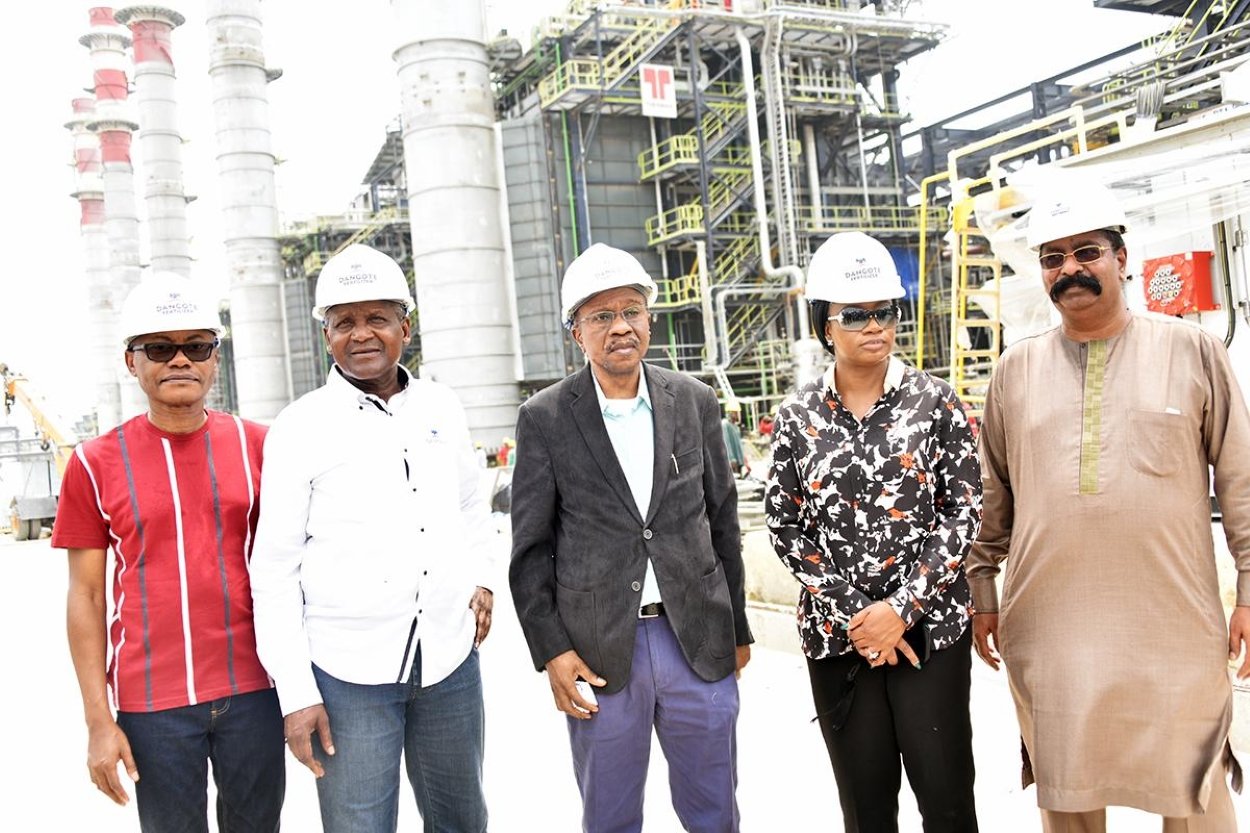

Aliko Dangote has announced a major strategic expansion of the Dangote Petroleum Refinery into the high-margin petrochemicals market. The move is designed to reduce Nigeria’s dependence on imported industrial raw materials while positioning the facility as a global supplier of ingredients used in detergents, plastics, and various household cleaning products.
The expansion is underpinned by a new partnership with Honeywell International Inc., which will supply advanced processing technologies and catalysts to the Lekki-based facility. Under the agreement, the refinery will utilize Honeywell UOP’s Oleflex technology to produce 750,000 metric tonnes of propylene annually. This feedstock is essential for the manufacturing of packaging materials, consumer goods, and industrial products.
Additionally, the refinery is set to produce 400,000 metric tonnes per year of Linear Alkylbenzene (LAB). LAB is a critical ingredient in the production of biodegradable detergents and surfactants. Once at full operational capacity, the Lekki LAB plant is expected to be one of the largest of its kind in the world, addressing a significant $11.5 billion market opportunity.
“Our continued collaboration with Honeywell advances our vision to strengthen Nigeria’s industrial sector,” said Aliko Dangote, President of Dangote Petroleum Refinery and Petrochemicals. “These technologies enable us to help the region meet rising demand for consumer and industrial goods while supporting our nation’s supply chain independence.”
The petrochemical push coincides with a historic milestone for Nigeria’s energy sector. As of April 2026, data from market intelligence firms indicates that Nigeria has officially become a net exporter of petrol for the first time. The refinery exported approximately 44,000 barrels per day (b/d) of gasoline in March, surpassing domestic import levels. Recent shipments have reached new markets in East Africa, including a 317,000-barrel cargo delivered to Mozambique.
Looking ahead, Dangote has outlined plans to grow the refinery’s processing capacity from its current 650,000 barrels per day to 1.4 million barrels per day by 2028. If achieved, this would make it the largest petroleum refinery in the world. To fund this rapid growth and provide currency protection for investors, the group is preparing for a pan-African Initial Public Offering (IPO) later in 2026. The plan involves listing approximately 10% of the refinery’s shares across multiple African stock exchanges, with dividends expected to be paid in U.S. dollars.
Economists suggest that the transition from a fuel importer to a petrochemical and refined product exporter could significantly stabilize the naira and ease foreign exchange pressures. By producing these high-value chemicals locally, Nigeria is expected to support a new wave of downstream manufacturing, further diversifying the national economy away from a sole reliance on crude oil exports.

As a contributor to digital news portals, I create content that highlights real-world experiences and evolving viewpoints. My writing combines clarity with relevance to engage readers effectively. I am committed to delivering content that is both informative and relatable.