
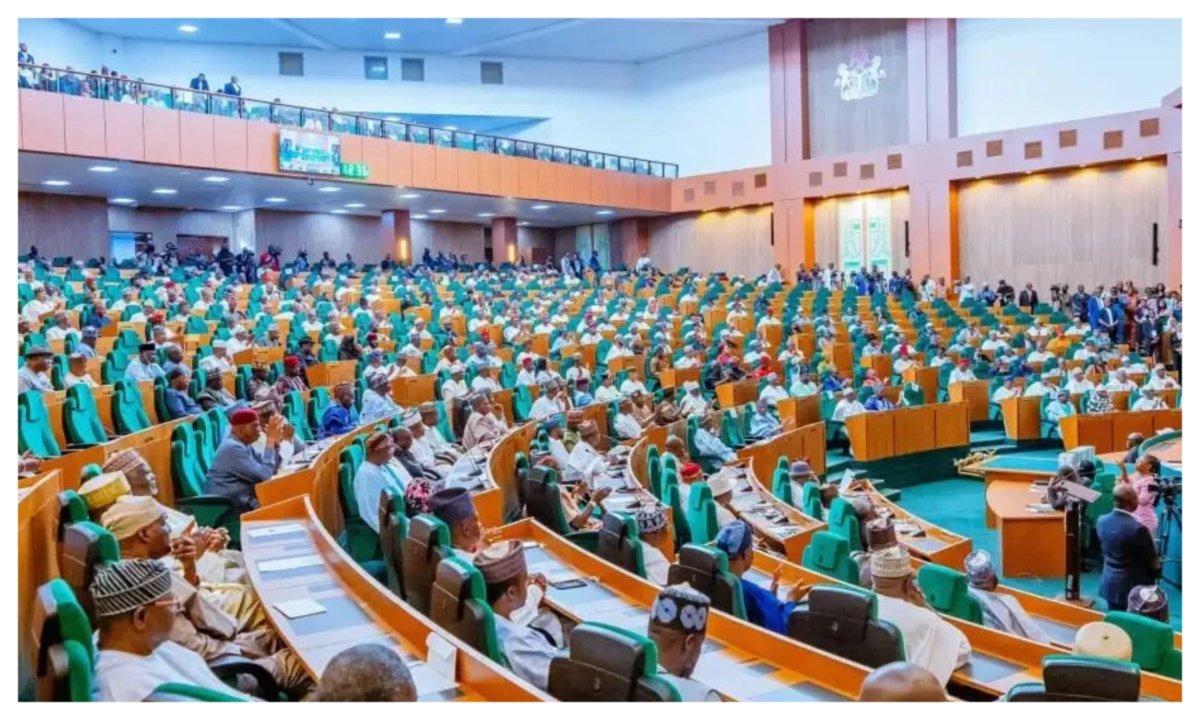

The House of Representatives has passed a significant amendment to the Electoral Act aimed at curbing the frequent migration of politicians between parties, a development that comes as strategic realignments intensify ahead of the 2027 general elections.
The legislative move, concluded on Wednesday, March 11, 2026, officially criminalizes dual political party membership. Under the new provisions, violators face a fine of 10 million Naira, a prison sentence of up to two years, or both. Furthermore, the amendment renders any form of dual membership legally void and unenforceable, signaling a rigorous attempt by the National Assembly to enforce party discipline and protect the sanctity of voter mandates.
Legal experts and political analysts suggest this amendment addresses long-standing inconsistencies in the enforcement of Section 68(1)(g) of the Constitution. While the Constitution dictates that lawmakers may lose their seats upon defection—except in cases of documented internal party division—the application of this rule has historically been uneven, particularly regarding executive governors.
The legislative crackdown coincides with a massive wave of defections that has reshaped the political map across several Nigerian states over the past 12 months. In Adamawa State, Governor Ahmadu Umaru Fintiri recently defected to the APC, accompanied by the Speaker of the State House of Assembly, Wesley Bathiya, and 15 other lawmakers. Similar shifts were recorded in Kano, where Governor Abba Yusuf moved from the NNPP to the APC in January 2026, and in the South-South and South-East regions, where Governors Siminalayi Fubara (Rivers), Peter Mbah (Enugu), and Agbu Kefas (Taraba) have also aligned with the ruling party.
The National Assembly itself has been impacted by these shifts. Senate President Godswill Akpabio recently read letters on the floor of the Senate confirming the defection of Senators Amos Yohanna, Aminu Iya Abbas, and Ikra Aliyu Bilbis from the PDP to the APC, further consolidating the ruling party’s numerical advantage in the upper chamber.
Reacting to the developments, Barrister Abdulrazak Boye Folorunsho, a legal practitioner based in Minna, noted that frequent defections weaken democratic institutions and erode public trust. He emphasized that without the strict enforcement of such laws, the will of the electorate is often submerged by the survival strategies of the political elite.
Civil society organizations and opposition stakeholders have voiced similar concerns. Dr. Mani Ibrahim Ahmed, National Treasurer of the ADC, argued that while governors may switch platforms due to political pressure or a desire for federal alignment, such moves do not automatically translate to a shift in grassroots support.
The amendment draws parallels to anti-defection frameworks in other democracies, such as India, where lawmakers face automatic disqualification for floor-crossing, and South Africa, which abolished the practice to preserve institutional accountability.
As Nigeria approaches the 2027 cycle, this new legal framework represents a critical test for the country’s democratic stability. Whether the threat of imprisonment and heavy fines will successfully “cage” opportunistic realignments remains to be seen, as politicians continue to weigh legal risks against the perceived benefits of federal patronage and re-election security.

As a contributor to digital news portals, I create content that highlights real-world experiences and evolving viewpoints. My writing combines clarity with relevance to engage readers effectively. I am committed to delivering content that is both informative and relatable.


