
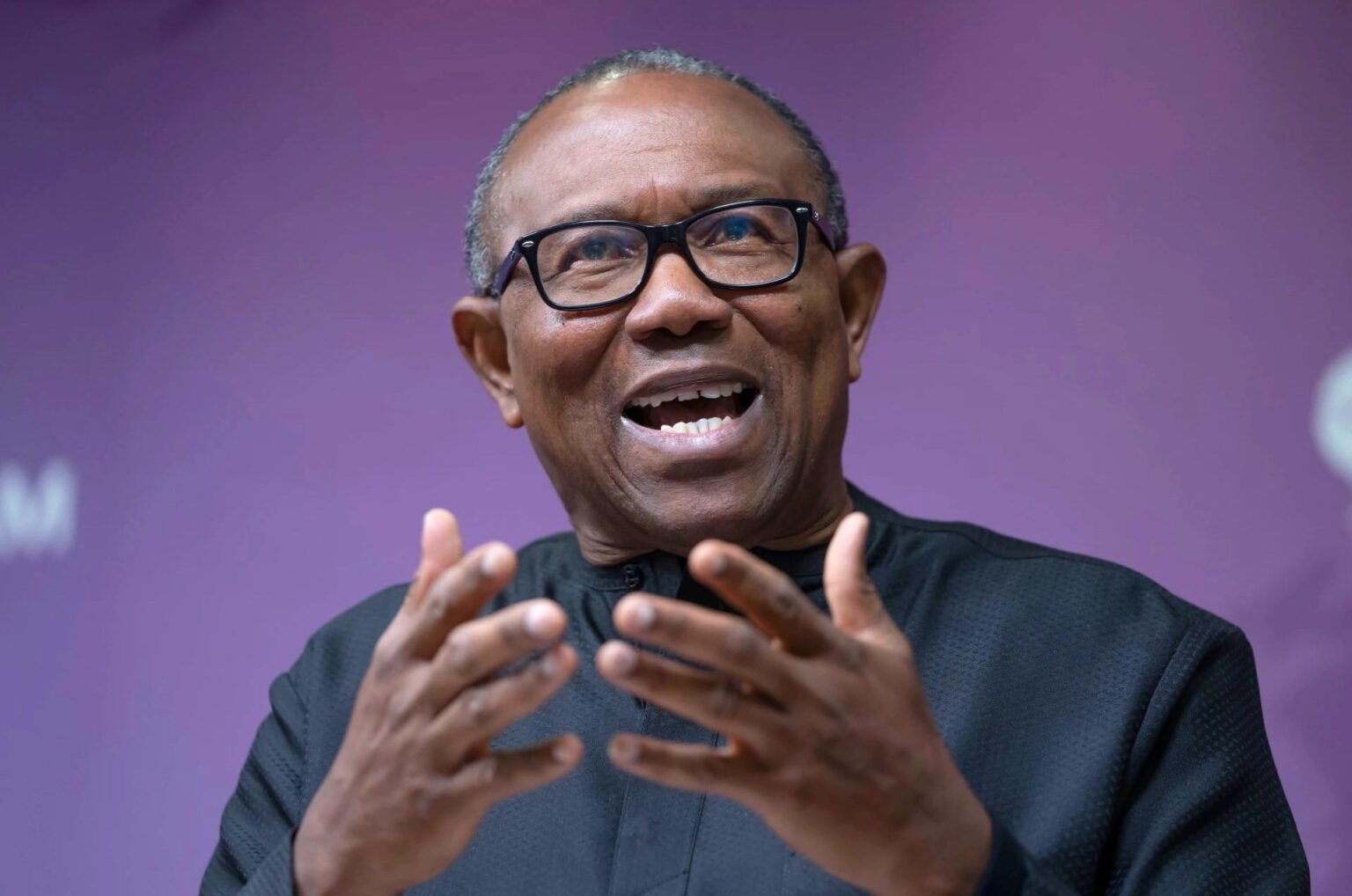

Former Labour Party presidential candidate, Mr. Peter Obi, has issued a pointed critique of President Bola Ahmed Tinubu’s administration over the persistent instability of Nigeria’s power sector. In a detailed statement released on Thursday, Obi linked the current electricity crisis to unfulfilled campaign promises, sparking a fresh national debate on the federal government’s energy reforms.
Obi’s remarks centered on a specific pledge made by President Tinubu during the 2023 election cycle, where he reportedly stated, “If I don’t give you constant electricity in four years, don’t vote for me for a second term.” Obi argued that nearly three years into the current four-year mandate, the administration has failed to achieve a significant breakthrough in the Nigerian Electricity Supply Industry (NESI).
According to data cited by the former governor, Nigeria’s average power generation remains trapped below the 4,000-megawatt mark. This stagnation persists despite the implementation of higher electricity tariffs, a move the government previously argued was necessary to attract investment and stabilize the grid.
Obi further highlighted the stark disparity between Nigeria’s energy output and regional standards. “Nigeria’s electricity consumption remains among the lowest globally, with about 144 kWh per capita compared to the African average of 617 kWh,” Obi noted, emphasizing that the lack of power continues to stifle industrial growth and small business productivity.
The critique also touched upon a recent diplomatic engagement in Plateau State. Obi referenced the President’s visit to Jos following a series of security breaches, quoting a remark made at the airport: “You have no light here, I fly out in ten minutes.” Obi described the statement as emblematic of the disconnect between the ruling class and the daily struggles of citizens enduring prolonged blackouts.
In contrast to Obi’s assessment, the Minister of Power, Adebayo Adelabu, maintains that the government’s strategic reforms are on the verge of a turnaround. Speaking at a quarterly NESI meeting in Lagos on March 26, 2026, Adelabu claimed that the sector has recently recorded its “highest generation levels” in years.
The Minister attributed these reported gains to improved gas supply to thermal power plants and ongoing grid infrastructure upgrades. “Our reforms are yielding results,” Adelabu stated, expressing optimism that Nigerians would see a tangible boost in electricity output within the coming weeks as more gas-fired turbines come back online.
Public reaction to the exchange remains polarized. On social media platforms, many Nigerians expressed frustration with the pace of development. One commentator, identified as KachiMD, remarked that it was “troubling that leaders struggle to stay minutes without electricity while citizens endure prolonged outages.”
Conversely, other citizens, such as a user named Tunde, argued for a more tempered perspective, noting that while accountability is vital, the structural decay of the power sector requires significant time to rectify.
As the 2027 electoral cycle approaches, the performance of the power sector is expected to remain a central pillar of political discourse. The Presidency has not yet issued a formal rebuttal to Obi’s latest statement, but all eyes remain on the Ministry of Power to see if the promised “generational peak” translates into steady supply for Nigerian households and industries.

As a contributor to digital news portals, I create content that highlights real-world experiences and evolving viewpoints. My writing combines clarity with relevance to engage readers effectively. I am committed to delivering content that is both informative and relatable.


