
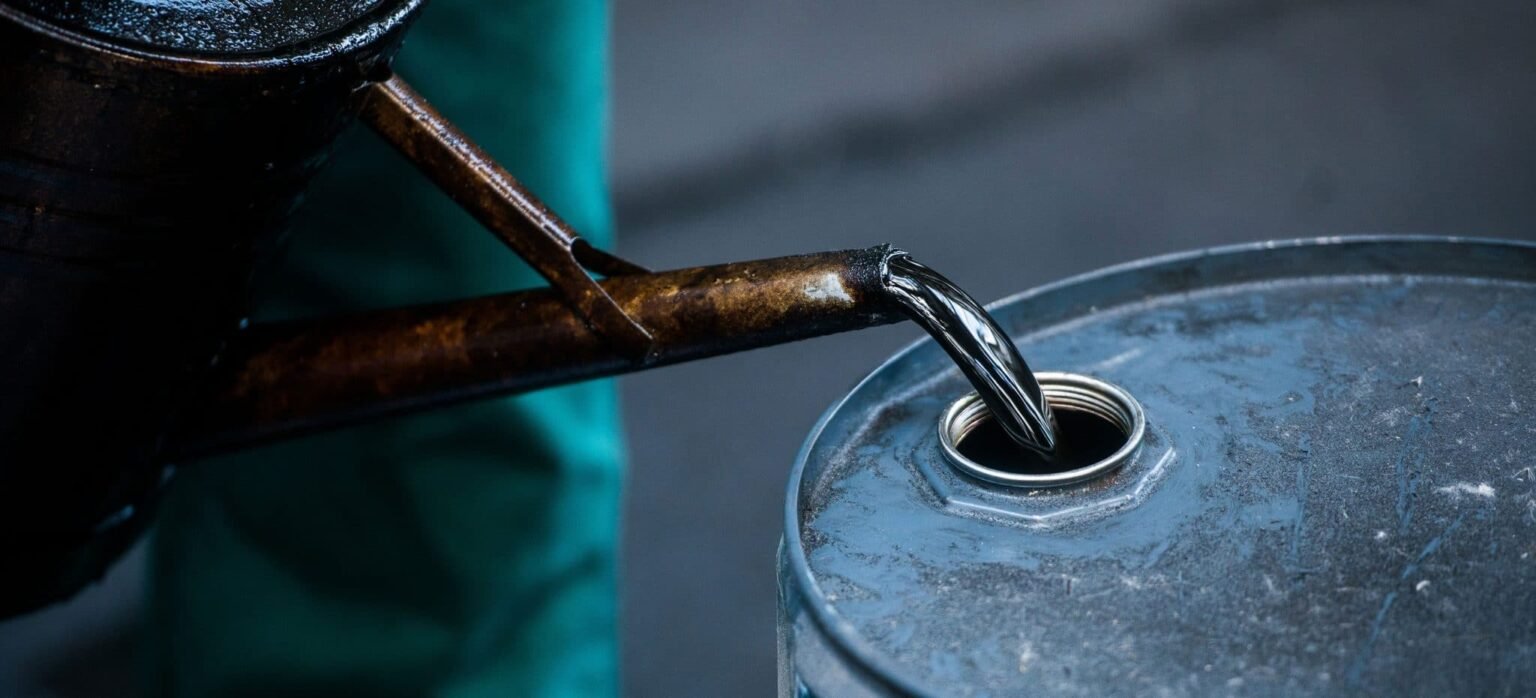

Energy markets are facing renewed volatility as a recently brokered US-Iran ceasefire appears increasingly precarious. Oil prices surged by nearly 3% on Thursday, reversing sharp declines from earlier in the week, as a massive Israeli military campaign in Lebanon and retaliatory rocket fire from Hezbollah cast a shadow over the truce.
Oil Prices and Market Reaction
On Thursday afternoon, West Texas Intermediate (WTI) crude was trading at approximately $97.28 per barrel, up over 3%. This recovery follows a dramatic 16% plunge on Wednesday, which occurred immediately after the ceasefire announcement. Brent crude followed a similar trajectory, rising more than 2% to reach $97.07 per barrel.
The rebound is largely driven by a renewed “risk premium” as traders express doubt that the two-week truce, brokered by the US and mediated by Pakistan, can hold. Equity markets have mirrored this uncertainty, with major Asian indices—including Tokyo, Hong Kong, and Sydney—all closing lower on Thursday as investors shifted away from riskier assets.
The Lebanon “Operation Eternal Darkness”
The ceasefire’s fragility is exacerbated by a massive escalation in Lebanon. On Wednesday, April 8, Israel launched “Operation Eternal Darkness,” its most powerful series of strikes in the current conflict, hitting over 100 targets across Lebanon, including central Beirut.
- Casualties: Lebanese health officials report at least 254 people killed and over 1,100 wounded in the Wednesday strikes alone.
- Retaliation: On Thursday morning, Hezbollah claimed responsibility for firing rockets into northern Israel, its first major action since the US-Iran deal was announced. The group characterized the rockets as a response to Israeli “ceasefire violations.”
Significantly, the White House has clarified that the US-Iran ceasefire deal does not include Lebanon, describing the Israeli-Hezbollah conflict as a “separate skirmish.”
The Strait of Hormuz Standoff
Despite White House claims of increased maritime traffic following the truce, independent monitoring suggests the Strait of Hormuz remains effectively restricted.
| Data Source | Observation (April 8-9, 2026) |
| White House | Reported an increase in vessel transits. |
| Windward AI | Tracked only 11 vessels transiting the strait, consistent with pre-ceasefire blockade numbers. |
| Industry Reports | No “blue-chip” operators or major oil tankers have returned to the route. |
Current Transit Conditions:
- IRGC Control: Shipping through the strait remains under a “supervised pause.” The Islamic Revolutionary Guard Corps (IRGC) continues to monitor all entries and exits to prevent weapon transfers.
- Proposed Tolls: Iranian officials have proposed a $1-per-barrel toll on oil transiting the strait, payable in cryptocurrency, alongside mandatory ship inspections.
- Risk Exclusion: Most major insurers continue to exclude the region from war-risk coverage, keeping approximately 3,200 vessels anchored outside the Gulf.
Outlook for the Islamabad Summit
Global attention now turns to Islamabad, Pakistan, where senior US and Iranian negotiators are scheduled to meet on Friday, April 10, to discuss a ten-point proposal for a more permanent settlement. Goldman Sachs has warned that if the ceasefire fails to hold and Middle East production losses persist, Brent crude could spike toward $115 per barrel by the end of the year.
The next 48 hours are considered a “critical test window” for the region; if the Islamabad talks fail to show progress or if the violence in Lebanon triggers a direct Iranian response, the temporary truce may collapse before its two-week expiration date.

As a contributor to digital news portals, I create content that highlights real-world experiences and evolving viewpoints. My writing combines clarity with relevance to engage readers effectively. I am committed to delivering content that is both informative and relatable.


