
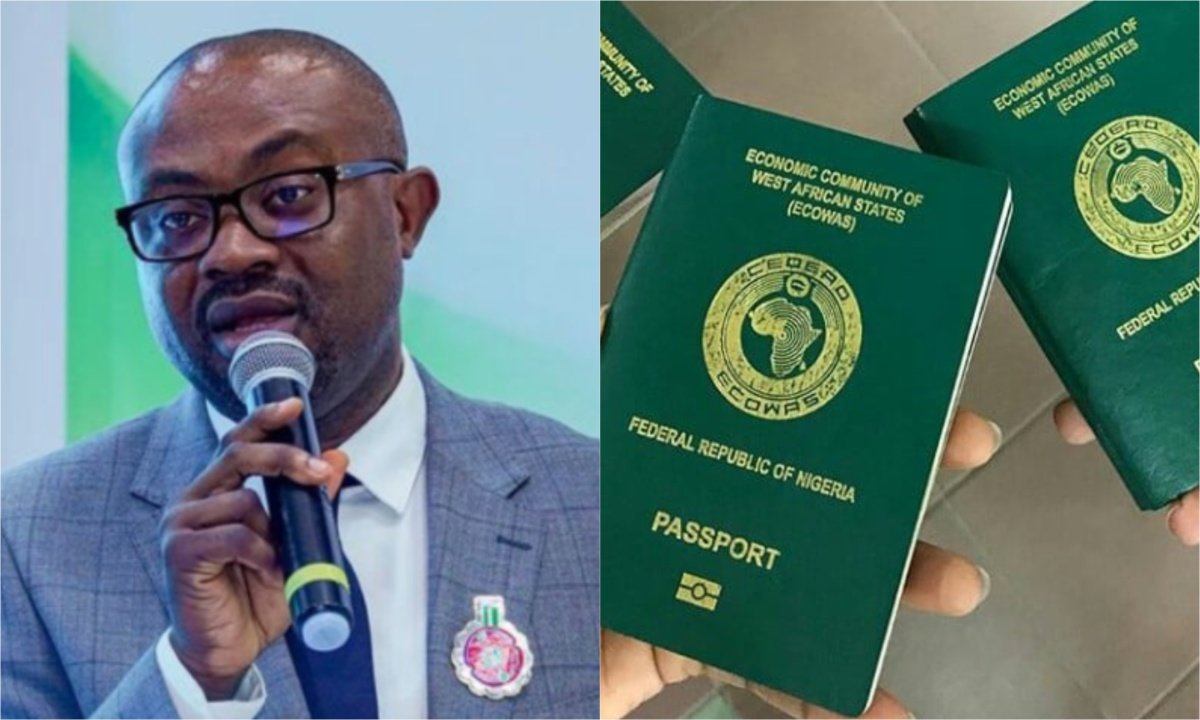

The Federal Government has issued a formal directive to the Nigeria Immigration Service (NIS) to immediately withdraw and deactivate the international passports of individuals who have renounced their Nigerian citizenship.
The order, issued by the Minister of Interior, Dr. Olubunmi Tunji-Ojo, targets persons whose applications for renunciation have been officially approved and registered by the President. The move is part of a broader effort to sanitize the country’s identity database and prevent the unauthorized use of sovereign documents.
Legal Basis and Rationale
The Minister grounded the directive in Section 29, Subsections (1) and (2) of the 1999 Constitution (as amended). The legal framework stipulates that:
- Any citizen of full age may declare their intent to renounce citizenship in a prescribed manner.
- Upon the President’s registration of such a declaration, the individual officially ceases to be a citizen of Nigeria.
“Once a person ceases to be a citizen of Nigeria, such an individual is no longer entitled to possess any sovereign document of the country, including the Nigerian passport,” Tunji-Ojo stated. He emphasized that the Ministry is tasked with safeguarding the “sanctity of Nigerian citizenship” and ensuring that only eligible individuals hold the nation’s travel documents.
Security and Reform Objectives
The Ministry of Interior clarified that this measure is a key component of ongoing passport and visa reforms. By deactivating these documents, the government aims to:
- Prevent Identity Fraud: Ensuring that “ghost” citizens or those with dual identities do not misrepresent themselves as Nigerians.
- Secure Borders: Strengthening the integrity of Nigeria’s travel documents in the international community.
- Facilitate Legitimate Travel: Streamlining systems to ensure that only current citizens have access to consular and sovereign protections.
The Rise in Citizenship Renunciation
The directive follows a reported increase in the number of Nigerians living abroad who have renounced their nationality to take up citizenship in countries that do not permit dual nationality (such as certain nations in Asia and Europe).
In 2024 alone, the Ministry of Interior processed over 300 renunciation applications, a trend that prompted the government to automate the withdrawal process. Previously, many individuals reportedly retained their Nigerian passports for ease of travel back home, despite having officially forfeited their citizenship status.
The Ministry concluded by reiterating its commitment to strengthening the nation’s borders and preventing “unauthorized or ineligible access” to Nigerian sovereign assets. Former citizens are advised to return their passports to the nearest Nigerian embassy or immigration office to avoid potential legal complications or detention at border crossing points.

As a contributor to digital news portals, I create content that highlights real-world experiences and evolving viewpoints. My writing combines clarity with relevance to engage readers effectively. I am committed to delivering content that is both informative and relatable.


