
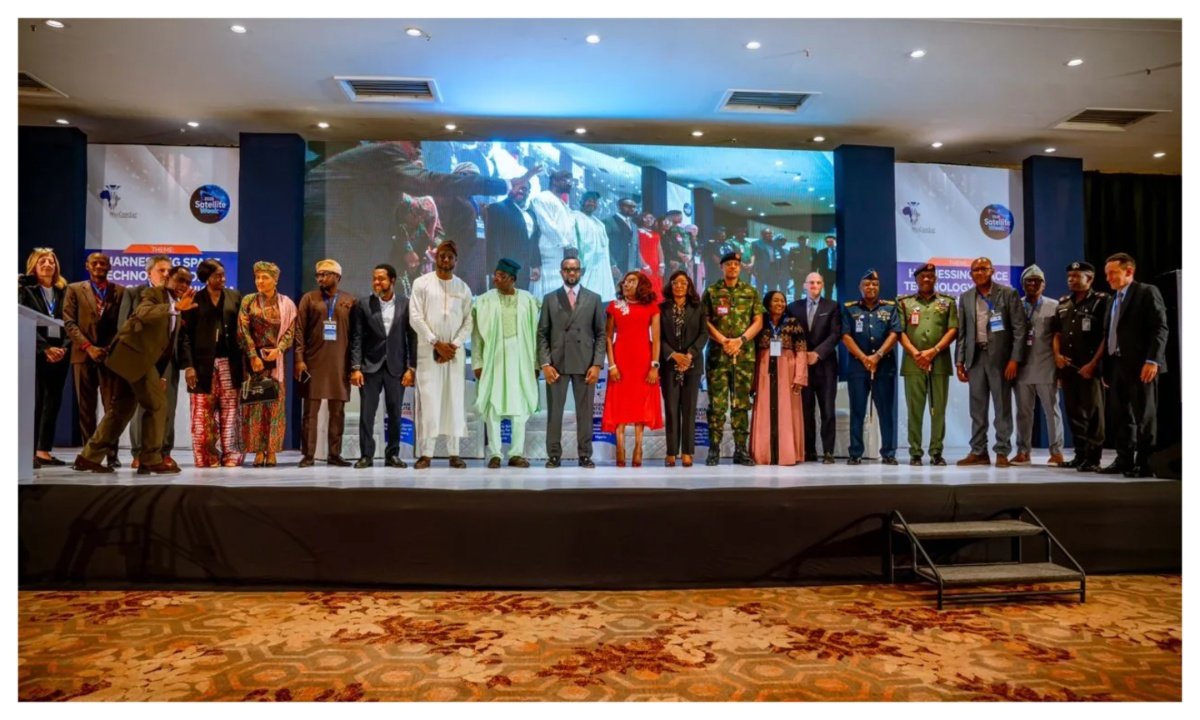

Nigeria is rapidly positioning itself as a leader in the African space industry following the announcement that President Bola Ahmed Tinubu has approved the acquisition of two additional communication satellites, NIGCOMSAT-2A and 2B.
The disclosure was made by Mrs. Jane Nkechi Egerton-Idehen, Managing Director of Nigerian Communications Satellite (NIGCOMSAT) Limited, during the opening of the 2026 Nigerian Satellite Week in Abuja on Monday, March 30, 2026. The event, themed “Harnessing Space for an Extraordinary Nigeria,” marks a pivotal shift in the nation’s strategy to leverage space-based infrastructure for economic competitiveness and national security.
Key Developments in Nigeria’s Space Program
The approval of the new satellites comes at a critical time for Nigeria’s digital infrastructure:
- Replacing NigComSat-1R: The current satellite, launched in 2011, is nearing the end of its 15-year design life. While its operational lifespan was recently extended to 2028, the new satellites are essential to ensure uninterrupted sovereign satellite capability.
- Economic Impact: The Minister of Communications, Innovation, and Digital Economy, Dr. Bosun Tijani, noted that these assets are core to the “Renewed Hope” agenda, facilitating better connectivity for agriculture, education, health, and logistics in areas beyond the reach of fiber optics.
- Security & Defense: High-ranking military and police officials at the event emphasized that satellite technology is now indispensable for intelligence gathering, surveillance, and reconnaissance (ISR) in modern warfare and counter-terrorism operations.
Strategic Growth and Innovation
Under the current leadership, NIGCOMSAT has evolved from a single-satellite operator into a multi-service provider. Key milestones highlighted during the week include:
- Revenue Growth: NIGCOMSAT’s revenue has reportedly doubled over the last two years due to strategic reforms and increased demand for broadband services.
- Global Partnerships: A landmark Low Earth Orbit (LEO) connectivity agreement with Eutelsat has been signed, alongside strengthened regional ties with the Kenya Space Agency.
- Startup Ecosystem: The agency launched Accelerator Cohort 3.0, a permanent initiative designed to support African startups developing space-based solutions for last-mile connectivity and logistics.
National Investment in Digital Future
To further bolster the ecosystem, the Federal Government is unveiling a ₦12 billion research fund for the digital economy. This includes funding for research clusters led by academic experts to drive evidence-based policymaking.
With these investments, Nigeria aims to transition from a “spectator” to a “competitor” in the global space economy, currently undergoing a massive transformation driven by the commercialization of Low Earth Orbit and the proliferation of satellite broadband.

As a contributor to digital news portals, I create content that highlights real-world experiences and evolving viewpoints. My writing combines clarity with relevance to engage readers effectively. I am committed to delivering content that is both informative and relatable.


